Terracotta stoves have shown their ability to retain heat over many years of use. With suitable fuel, the stove can serve as the primary source of warmth or a nice extra heating option. No matter where it is situated, its size, or how it is placed, the parts of a terracotta stove are basically the same. Here are a few details about each part:
pedestal
The building of a stove starts from the bottom and goes up. The lowest section is known as the plinth and is not related to heat transfer; it is mainly decorative. Before starting to create the plinth, it is essential to decide where the stove will go in the room. Experts suggest arranging the tiles on the floor in the exact way they will be set up. This way, when the construction starts, each piece can fit into its proper spot. A corner of the plinth will be the first piece laid down.
Stove body
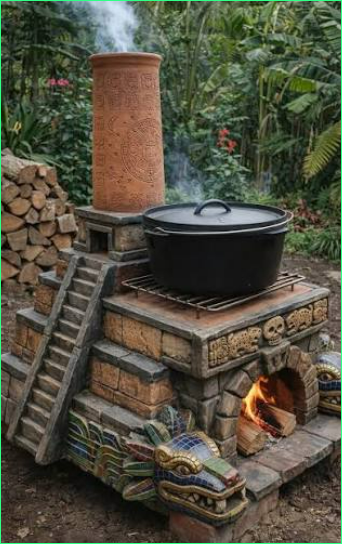
The main body of the stove is the largest and most visible part of the construction. The work continues with each row of planks and corners until the top is reached. In addition to special corner tiles, you will need decorative plates: shelves, eyelets, battens, pillars, plinths, sidewalls, arches. It all depends on the stove model you choose to build. You can have a classic parallelepiped model or a pyramidal system, developed on levels that require particular delimiting ornaments.
internal element
From this moment it is necessary to take into account the internal elements:
focus
The firebox is the chamber in which the fuel burns. It is made based on the type of fuel chosen. For solid fuel stoves, under the loading compartment there is a smaller ashtray, made of small solid brick, useful for suction and evacuation of burnt waste.
Smoke channels
The smoke escape routes are essential for efficient draft and for the safety of people near the stove. The gases created by combustion transfer heat through the tiles from the inside to the outside. This heat transfer occurs along the smoke channels created within the main body of the stove. Smoke evacuators can have horizontal, vertical or mixed paths.
Metallic objects
Another important component of stoves is represented by metal objects. These include the hearth door, the ashtray door, the grate between them and the downspouts. If the stove will also be used for cooking, not just for thermal comfort, a terracotta stove must be installed. The great advantage from this point of view is that a stove can serve multiple rooms. Thus, in the kitchen you will be able to have the part with the hearth, stove and oven, while beyond the dividing wall, in the living room, you will only have the main body of the stove, which releases heat.
Dome
The dome or lid represents the actual roof of the stove. Inside it will have a single layer of fire bricks or tiles in two layers. The final look will be given by tiles on the upper level, chosen based on the shape and model of the stove, with corner or lateral cornices.
Horn
The stove is connected to the home’s flue via one or more downpipes. It is essential for the draft that the downspout has a horizontal position or with an upward slope, in no case descending towards the chimney. Therefore the stove hole will be at a level equal to or lower than that made in the flue.
Building a stove is an activity that requires the presence of a specialist. Considering that we work with open flames and exhaust gases, the health of the beneficiaries and the safety of the building are paramount. The above information is useful for preparing and managing the site. A well-made stove, made with quality materials, guarantees pleasant and healthy thermal comfort.
¡Síguenos en Facebook para recibir nuevas publicaciones!
Seguir en FacebookLatest Posts Published
10 ways to save when you want to design a garden with a swimming pool
How to grow rose bushes at home
How to Grow Sunflowers: Planting, Watering and Care
3 types of grills suitable for your garden or terrace
How to build a toy box at home
Ideas for furnishing your terrace with wicker furniture
10 Rustic Terrace Ideas for a Relaxing Outdoor Space
How to create beautiful and very simple floral compositions
How to cure brown leaves that appear on avocados?