
Telecommuting has changed our home life a lot. Without a separate office, many of us have had to create a special area in the house for working. Some people have decided to put their desk in the living room, while others have chosen to set it up in the bedroom. It really depends on each person’s need and, of course, the available space.
The quick pace of this change in our work environment made it hard to properly think about the benefits and drawbacks of one location versus another. We consulted decoration and relaxation specialists to share the pros and cons of both options. Here is what we learned.
The benefits of putting the office in the living room
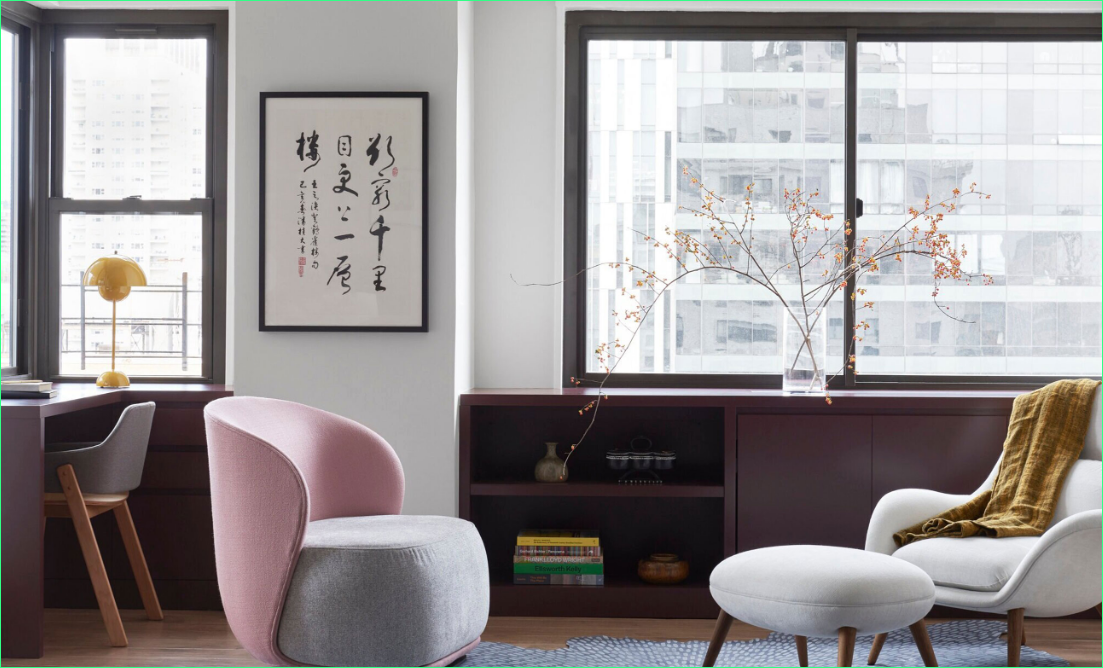
Attached to a wall, near the window, under the stairs, in a library, or behind the couch, the office’s location in the living room can vary greatly. The desk itself can often serve multiple purposes. This aligns with the new idea of making the living room a flexible area, where people work, children do homework, and little ones play. Here are the main benefits:
You have more space
 The 25 best shelves for storing books in the living room
The living room is generally the biggest part of the house, allowing more individuals to work there without bothering each other. Being around others helps create a social atmosphere, even if everyone is focused on their own tasks.
You have more natural light
Along with space, the living room typically has the best natural light in the home, connecting us to the outside world, which makes it a great choice for the office setup. It’s essential that the work furniture matches the rest of the room’s style (materials, colors, shapes, and so on).
If the office or work area is shared with family members, it’s always better to place it in a shared area so that no one loses their personal space.
Enhances focus
5 fun and simple ideas to decorate your home for Halloween
Having a designated spot in the room for work boosts concentration and, therefore, productivity. That sounds like a significant advantage, wouldn’t you agree?
Separate environments
If you place the desk behind the sofa, for example, it will also act as a separating element between the living room and the dining room.
Disadvantages of placing the office in the living room
None of us like turning our living room into an office. The location of the office in it forces us to maintain strict order before, during and, above all, after each working day. Let’s see what its main disadvantages are:
5 spectacular ideas to transform your terrace or balconyThe common space is invaded
It is advisable not to invade too much this common space, which is also used for other purposes (eating, watching TV, playing…). It is essential to keep the living room tidy. with shelves, boxes, trays or baskets to be able to leave everything collected at the end of the tasks.
One of the big problems of working in the dining room is privacy, if we live or work with multiple people in the house. For this reason it is proposed to divide the spaces with curtains, tall furniture or panels that help us improve the acoustics and divide the space to create a more intimate and personal atmosphere.
Work furniture does not match the style of the room
The chair in the living room or kitchen was fine at first, but after a year of working from home, your back is hurting and needs a proper, cozy and supportive chair. And of course, the look of this kind of chair is not very attractive, nor does it blend with your living room’s style. Attention designers, we want chairs with adjustable backs that please our eyes!
When adding the office to the living room style, consider flexible furniture that we can use for various tasks, like side tables or shelves to keep shared items (work, decorative pieces) and multi-purpose chairs (work/additional dining chair). Besides helping us use the space better, it will ease the merging of the work setup with the rest of the room.
Are you tempted to lie down on the couch?
Lying on the couch is nice to relax from time to time, but be careful! Don’t let it turn into a common routine while working, or you’ll suffer in your neck. If you sit on the couch to work, not lie down, you’ll need a laptop holder nearby.
Another piece of furniture for the living room!
Yes, for many, adding a desk to the living room meant less space. The size of the desk should match the size of the room.
It is better to pick a model that blends in when you are not working (console tables, folding furniture, a shelf in the bookcase or a board under the window, a wheeled table that can move in and out of the room as needed). They take up little space and do not visually clash with the other furniture.
The benefits of placing the office in the bedroom
In the closet, under the windows, on the shelf… Designers have shown us numerous ways to fit the office into the bedroom. But is setting it up here a good idea? Let’s explore some of its benefits:
Keeps the room tidy
Having the office in the bedroom prevents the living room from being cluttered, looking like a battlefield. Additionally, the desk in the bedroom is less noticeable to guests.
Offers separation
If the home office is in the bedroom, ensure it is a quieter spot, as it is your comfort area and, therefore, it will be easier for you to work peacefully.
The bedroom is one of the most private areas in the house and when we seek privacy and break from work, it is probably the space we consider first. The designer suggests placing it near the window to benefit from natural light, choosing furniture with closed storage that allows, once the day is done, to hide everything away so that it is not seen and we can disconnect.
In terms of materials and colors, to blend the office with the bedroom design, it is a good idea to choose wood and natural fibers, neutral shades (white, grey, soft colors) and simple shapes that take up less space. This way we can keep the feeling of the bedroom as a spot for rest and relaxation.
It gives the office a dual purpose
Putting a table or a board in the bedroom is a mixed choice, because it allows you to use it as a desk, but also as a makeup table or reading nook. Additional tasks that provide us comfort and relaxation.
Drawbacks of putting the office in the bedroom
The bedroom – according to the furniture brand Kibuc – is not the right place for a work area, since it is the spot for rest and relaxation. The time we spend resting is as important, if not more, than the time we spend being productive.
Underestimates rest
The bedroom isn’t just another area in the house, it is one of the major wellness spots of the home. It is the health area, unlike how up to now it was seen as a space that could be for multiple uses.
We think everything in the room should be turned off, there shouldn’t be any gadgets that disrupt rest or bring in or extend work. If you have a laptop in your bedroom, you may be eating into your sleep time to get work done. Any space that isn’t supportive of falling asleep and staying asleep will affect our mental, emotional and physical health.
It is always best to keep work and relaxation activities in separate rooms, otherwise our recovery times won’t be as good. The guest bedroom, for instance, would be perfect for setting up a workspace without losing its main role as a spare bedroom.
Another idea? Using a screen is an effective way to create separations and divide spaces while working.
Promotes mess
Always keep your bedroom clean and organized. And if you work there, even more so. The mess of items in the surroundings, like clothes, books, computers. prevents the mind from relaxing.
Here, just like in the living area, it is vital to maintain the space neat with storage solutions where you can keep objects when they are not needed. It is crucial that the bedroom remains organized and can still be your space of relaxation even after you turn off the computer.
Ideally, do not have a TV, computer or cell phone in it and, if you do, avoid using them two hours before going to sleep.
It makes sleeping hard
In addition to light, noise, mattress or temperature, the surroundings also matter as they influence sleep. The setup of items like computers that can prolong the work hours makes it hard to balance, which is why using devices in the bedroom is not recommended. This is more typical of hotels than a place for restful sleep at home.
Office in children’s bedrooms, yes or no?
In many children’s bedrooms, the desk is simply another piece of furniture. The time spent doing homework can be lengthy, especially during teenage years.
In the case of kids, we think it is just as or more essential that relaxation and work areas are separated in their bedroom. Children should learn to study correctly while sitting at a table that allows them to write comfortably and have all their supplies nearby.
Teenagers are different and require a period to adjust to technology. We must emphasize educational guidelines. Even if space reasons mean they have tech devices in the room, it is important for parents and children to be taught to use devices only when they are not going to sleep.
¡Síguenos en Facebook para recibir nuevas publicaciones!
Seguir en FacebookLatest Posts Published

10 ways to save when you want to design a garden with a swimming pool

How to grow rose bushes at home

Sunflowers: care, how to plant them and when to water them

3 types of grills suitable for your garden or terrace

How to build a toy box at home

Ideas for furnishing your terrace with wicker furniture

10 Rustic Terraces You’ll Love

How to create beautiful and very simple floral compositions

How to cure brown leaves that appear on avocados?