
You know how to care for the African violet, so that it produces flowersand enjoy the beauty of this indoor plant all year round? Cheerful, brightly colored… The African violet is an easy-care indoor plant, characterized by its simplicity, resistance and undeniable beauty. Small in size, it stands out for its beautiful flowers which, with proper care, can last all year round, adding a touch of color and vitality to the decoration of your home. In fact, this is one of the characteristics that make the African violet a very popular and appreciated plant. These are its treatments and characteristics.
Characteristics of the African violet
The African violet, whose scientific name is Saintpaulia, is a perennial plant native to East Africa. It belongs to the Gesneriaceae family. Its leaves are thick, rounded or heart-shaped and intense green in color. Furthermore, it has a very characteristic type of fur. Its flowers can be purple, pink, red or white. They have yellow stamens, where pollen accumulates. Its root system is a little deep, so it adapts well to small and large pots. Its most popular variety is Saintpaulia Ionantha.
How often should you water the African violet?
The African violet is a plant particularly sensitive to excessive watering. Therefore, when you do this, you have to be very careful not to overdo it. A very effective way to do good is capillary watering, so be careful not to water leaves, stems or flowers. Then place the pot on a plate full of water for 20 minutes to absorb as much water as possible and discard any remaining water. In the warm seasons, spring and summer, carry out twice a week, while in autumn reduce watering to once a week and, in winter, space them even further apart, watering every 15 days. In any case, always maintain a good level of humidity, but without flooding it.
Where to place an African violet?
The location of the African violet is essential so that it can offer flowers for several months. This flowering houseplant needs to be placed in a very bright room, but protected from sunlight. During autumn and winter you can place it near the window.
 15 maintenance tips for alternative flooring materials for your home
Another aspect that must be taken care of so that the African violet remains with leaves and in flower is humidity. However, avoid spraying it, because wetting the leaves and flowers will make them rot. You can instead place a plate under the vase with some pebbles and water (always making sure that the substrate does not touch the water), wet moss or peat.
Which substrate is best for an African violet?
One of the secrets to ensuring that the African violet does not suffer from excessive watering is to grow it with a substrate that maintains humidity but avoids flooding. This is why it is essential that it has good drainage. You can mix sand, peat, mulch and universal substrate in equal parts.
How to make the African violet bloom all year round?
The key to the African violet offering flowers throughout the year is to provide it with the necessary nutrients. For this you will have to pay it periodically. It is best to use a liquid fertilizer with proportions of nitrogen, phosphorus and potassium. There are specific fertilizers for African violets. Mix it with irrigation water and always following the manufacturer’s instructions. Do this every three weeks.
Can the African violet be grown outdoors?
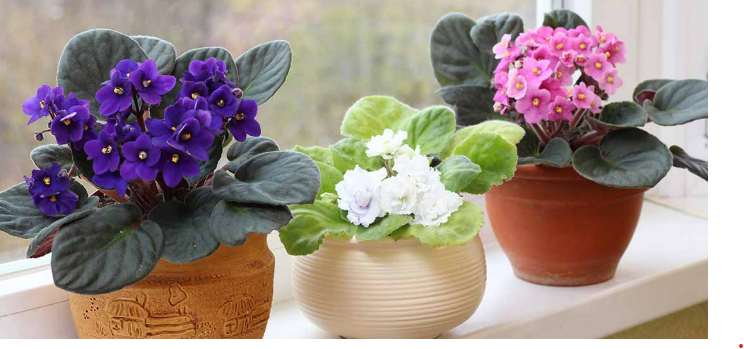
Yes, it is possible as long as it is positioned in a shaded area of the garden and protected from bad weather, low temperatures and rain. And it is that the African violet cannot tolerate temperatures below 14 °C. The ideal, in fact, is to store it at a temperature between 18 and 22 °C.
If you grow your African violet in a pot and keep it indoors, you can always move it outside during the summer, as long as the temperatures are not too high and you don’t place it in a location exposed to direct sun.
Common Problems with African Violets
– My African violet is rotting: this usually happens due to excessive watering. You can try to recover it by removing the plant from the pot and eliminating the wet substrate, being careful not to damage the roots. Leave to air between 12 hours and a day and renew the support.
– Does not flower: requires fertiliser. Use one specifically for African violets.
 How to organize the most welcoming bar in your home?
– Yellow leaves: the temperature is not the most suitable. Move it to a warmer place and remember not to subject it to temperatures below 10°C. Furthermore, space risks more.
– Brown spots on the leaves: this is because they were either wet or have suffered a lot of exposure to the sun. Move it and remove damaged leaves.
¡Síguenos en Facebook para recibir nuevas publicaciones!
Seguir en FacebookLatest Posts Published

10 ways to save when you want to design a garden with a swimming pool

How to grow rose bushes at home

Sunflowers: care, how to plant them and when to water them

3 types of grills suitable for your garden or terrace

How to build a toy box at home

Ideas for furnishing your terrace with wicker furniture

10 Rustic Terraces You’ll Love

How to create beautiful and very simple floral compositions

How to cure brown leaves that appear on avocados?