
Two paint colors can give a bedroom depth without requiring a full renovation. The easiest approach is to choose a main shade for most walls and an accent color for the wall behind the bed. You can also divide a wall horizontally or use the second shade in an alcove.
These 22 combinations range from soft neutrals to bolder contrasts. Paint samples on a board and check them in daylight and at night before choosing a finish.
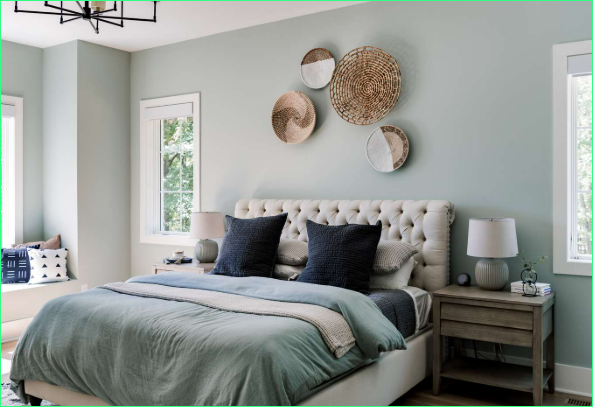
22 two-color bedroom paint combinations
1. Black and white
Use warm white on three walls and black on the wall behind the headboard. If a full dark wall feels too strong, paint the lower portion of the wall black and keep the upper portion white.
2. Blush pink and brown
Pair a muted blush with a soft cocoa or taupe. Try pink on the main walls and brown behind the bed, then repeat the brown in a wooden nightstand or picture frame.
3. White and brown
Warm white and chocolate brown make a simple, grounded combination. Use brown as an accent and choose an off-white with a warm undertone to connect the two colors.
4. Yellow and beige
A soft yellow brings warmth to a beige room. Paint the headboard wall yellow, or use a narrow yellow panel if you prefer a quieter look.
5. Light blue and navy
Use pale blue on the main walls and navy as an accent. The deeper shade can frame the bed, while white bedding keeps the contrast crisp.
6. White and periwinkle
Pair white with a blue-violet periwinkle for a gentle touch of color. Try periwinkle behind the bed and keep the remaining walls white.
7. Beige and purple
Warm beige balances the richness of a muted purple. A purple alcove or headboard wall adds contrast without covering the entire room.
8. White and mint green
Mint green and soft white create a fresh, light look. Paint the lower half of the wall mint and the upper half white, using painter’s tape for a clean edge.
9. Pink and blue
Combine dusty pink with a soft blue in a child’s room or a guest bedroom. Choose shades with similar intensity so neither color overwhelms the other.
10. Dark green and beige
Use deep green as the accent and sandy beige on the remaining walls. Natural wood and neutral bedding complement the earthy palette.
11. Burgundy and soft gray
A burgundy feature wall brings depth to pale gray walls. Test both colors together first: a gray with a slightly warm undertone can soften the contrast.
12. Sage green and earthy brown
Sage and clay or light brown suit a nature-inspired room. Use sage over most of the space and introduce the earth tone on a smaller wall or painted panel.
13. Navy blue and white
Navy behind the bed and white on the other walls create a defined focal point. Repeat the navy in a cushion or throw to tie the room together.
14. Gray and brown
Pair a warm gray with a medium brown for a relaxed, neutral scheme. Try a brown headboard wall and gray elsewhere, then use a fabric sample to check the colors against your bedding.
15. Gray and lavender
Soft lavender can add color without making the room feel busy. Use light gray as the main shade and lavender on an accent wall or inside a recessed area.
16. Plum-gray and light gray
Choose a gray with a subtle purple undertone and pair it with a lighter neutral gray. The contrast is understated, especially when the two samples share a similar finish.
17. Purple and white
Let a muted purple stand out against warm white. Paint the wall behind the bed purple or use the color in a painted arch for a smaller accent.
18. Navy and beige
Beige softens navy and can make a dark accent feel warmer. Try beige walls with a navy headboard wall, then add wood or woven textures.
19. Charcoal and gray
For a low-contrast alternative to black and white, pair charcoal with a lighter gray. A charcoal panel behind the bed keeps the darkest color concentrated in one area.
20. Gray and pale blue
Use a soft gray as the backdrop and pale blue as an accent. Check that the undertones work together, since some grays look warmer or cooler as the light changes.
21. Coral and blue
Pair a restrained coral with a muted blue for a more colorful room. A half-painted wall is one way to introduce both colors without committing to a full accent wall.
22. White and terracotta
Terracotta adds warmth to an off-white bedroom. Use it behind the headboard or in an alcove, and bring the color into the rest of the room with a throw or rug.
How to choose and apply your colors
- Start with the room’s light. Observe sample boards at different times of day; the same paint can look different in daylight and under lamps.
- Choose the accent location. The wall behind the bed is a common choice, but an alcove or a partial wall can work too.
- Check what will stay. Compare paint samples with your flooring, furniture and bedding before buying paint.
- Prepare the surface. Clean the walls, fill small holes and follow the paint manufacturer’s preparation and ventilation instructions.
- Use tape for a divided wall. Measure and mark the line before painting, and follow the tape and paint instructions for removal.
More bedroom ideas
- Plan a comfortable bedroom layout
- Explore ideas for decorating small rooms
- Build a color palette for your home
¡Síguenos en Facebook para recibir nuevas publicaciones!
Seguir en FacebookLatest Posts Published

10 ways to save when you want to design a garden with a swimming pool

How to grow rose bushes at home

How to Grow Sunflowers: Planting, Watering and Care

3 types of grills suitable for your garden or terrace

How to build a toy box at home

Ideas for furnishing your terrace with wicker furniture

10 Rustic Terrace Ideas for a Relaxing Outdoor Space

How to create beautiful and very simple floral compositions

How to cure brown leaves that appear on avocados?