

Roses are probably the most popular garden flowers, but few people try to grow them indoors. It’s a shame, because an indoor rose bush produces the most exquisite buds, under the right conditions and treatment.
As vigorous and hardy outdoor plants, the primary needs of rose bushes are plenty of light, water and food, as well as reasonable cold and air conditions. An overheated, poorly ventilated and poorly lit room is not suitable for them at all; the stems will become thin and weak and the leaves will drop. They should be grown in a sunny, ventilated sunroom, in a garden room or ornamental greenhouse, and, certainly, in a production greenhouse, where millions of rose bushes are grown by commercial florists. Smaller varieties grow well on a sunny windowsill. But no rose bush can become a permanent houseplant; It is advisable to always allow yourself a period of “rest” in the open air for part of the year.
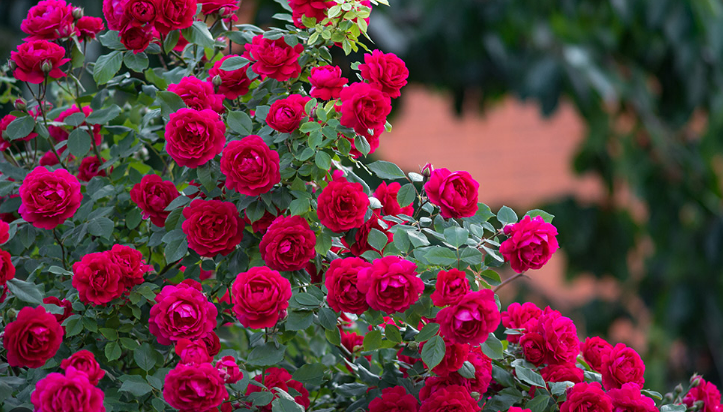
Varieties of cultivable roses
Almost all of the most vigorous types of rose bushes (Rosa species, varieties and hybrids) can be grown indoors, as long as their location is chosen correctly. Creepers are splendid specimens for lining the back wall of an ornamental greenhouse or its pillars, for example, as long as they are not too vigorous. It is best to plant them permanently in a bed of rich soil. For gardens or verandas, lower-growing bush roses can be grown in pots and forced to sprout early. Choose tea varieties if you want large, luscious flowers, Floribunda for medium-sized flower clusters, and Polyantha if you prefer smaller masses of buds.
Small rose bushes growing only 20 to 30 cm high are ideal for window sills, but between them and common bushes there is a special group suitable for interior life. These are the Garnette varieties, which were first bred in Germany and probably have a longer flowering period than any other rose bush. They form compact and bushy plants, about 60 cm tall, with small double flowers, which emerge in bunches.
grow rose bushes
In order for the tuff rose to germinate in spring it is necessary to start processing in autumn. Young plants of the shrub varieties should be planted in 20-25 cm pots and miniature plants in 10-12 cm pots. Use a rich mixture and pack it firmly around the roots. Water the plants and place them outdoors until mid-winter. If possible, sink the pots into the ground; otherwise, use peat to avoid freezing.
In the middle of winter, cut the bushes. Cut the weak branches and then the other stems at the same height as the three or four strong shoots coming from the base. The plants can now be moved indoors. Ideally, the temperature should rise slowly over the next few months, from around 5°C at night and 8°C during the day in mid-winter to around 13°C at night and 18°C during the day in late spring. If not, choose a cool, bright place.
During this growing period, the soil mixture must be kept fairly moist. Once the buds begin to form, you need to spray a liquid fertilizer every 8 to 10 days. Foliar sprays are essential for maintaining humidity. This treatment must be continued throughout the flowering season, which lasts until the beginning of summer. Remove all dead flowers and monitor for pests and diseases using a systemic insecticide or fungicide if necessary.
When the plants stop flowering, move them outside and, if possible, sink the pots into the ground. Water them regularly in dry weather and remove any shoots that grow. If you want to push them back, transplant them to new soil in the fall. If not, remove the top 4-5cm of soil and replace it with new soil. Then, in midwinter, cut and bring the plant indoors again. However, plants should not be expected to respond well to this treatment more than two or three times.
¡Síguenos en Facebook para recibir nuevas publicaciones!
Seguir en FacebookLatest Posts Published

10 ways to save when you want to design a garden with a swimming pool

How to grow rose bushes at home

Sunflowers: care, how to plant them and when to water them

3 types of grills suitable for your garden or terrace

How to build a toy box at home

Ideas for furnishing your terrace with wicker furniture

10 Rustic Terraces You’ll Love

How to create beautiful and very simple floral compositions

How to cure brown leaves that appear on avocados?